

beyonce children |
- Truth About Beyonce and Jay-Z’s Marriage - Gossip Cop
- Art of Feeling: Why we should celebrate anger - BBC News
- A Photo of Beyoncé's Children Was Leaked on Instagram—And That's Not Okay - Oprah Mag
| Truth About Beyonce and Jay-Z’s Marriage - Gossip Cop Posted: 27 Oct 2019 12:00 AM PDT  (Getty Images) Beyonce and Jay-Z are two of the most famous people in the world, but the couple's level of popularity often comes with drama. After Beyonce's incredibly personal 2016 album Lemonade was released, and talk of Jay-Z's alleged infidelity spread, gossip about the power couple's relationship grew into a fervor that continues to this day. Here are a few of those rumors Gossip Cop debunked in the years after the album's release. Back in July 2017, the National Enquirer published a story claiming that the two were on the verge of a $1 billion divorce over a parenting clash involving Blue Ivy. The outlet cited an anonymous "insider" that said Jay-Z objected to Beyonce's supposed efforts to push their daughter into modeling. Meanwhile, Beyonce, said the tabloid, felt that modeling would open up an entire world of opportunities for Blue Ivy, and blew up at her husband's opposition. However, the tabloid referred to the argument as happening "just two weeks after the birth of [their] twins" Rumor and Sir. However, birth certificates showed that the babies were born a full month and a half before the outlet published its piece. Plus, Jay-Z had been nothing but supportive of his daughter's public appearances, smiling next to her on the red carpet and including her in his music videos. In October of that year, an unnamed tipster supposedly told Star that Beyonce had set "marriage rules" to keep Jay-Z loyal. First, the source says the rapper had to "make peace with her sister Solange and convince her that he is no longer a dog." The second "rule" required Jay-Z to be "committed" to their family, and the third gave Beyonce the power to choose whether or not the couple had any more kids. The fourth alleged rule ordered him to stay away from Kanye West and his wife, Kim Kardashian. The final rule, the source concluded, was that the couple could not live separate lives. While the list does sound both intense and interesting, it was still fictional. One of Gossip Cop's sources in the couple's camp told us that there was no list of rules or ultimatum between the spouses. Although Star's piece was clearly incorrect, it wouldn't be the last time the tabloid would try to cash in on the couple's marriage. This past January, the magazine came up with another story about Jay-Z and Beyonce getting a "billion-dollar divorce." According to the publication, Beyonce didn't want to waste any time trying to fix something "irretrievably broken" and refused to have their children "grow up in an unhappy environment." The "Formation" singer planned to go after "the bigger piece of their brand's profit," said the magazine's source. The outlet further claimed the big argument that ended the relationship was over Jay-Z's "love child," a young man that alleged that he was a product of one the rapper's past hookups. "Bey'd done her best to put on a brave face through all of the infidelity reports, but actually having a child with another woman is something no wife could ever get over," the publication's insider said. However, the "love child" first started making claims about Jay-Z being his father in 2015, so it made no sense that the controversy was resulting in a split four years later. The rapper has repeatedly denied the allegations about him having an illegitimate son. Plus, Beyonce and Jay-Z had just renewed their vows the previous year, and multiple outlets reported that the spouses were in a better place than ever. Once again, the gossip media got it wrong about the music superstars, just as they have in the years past.  |
| Art of Feeling: Why we should celebrate anger - BBC News Posted: 14 Nov 2019 02:51 AM PST 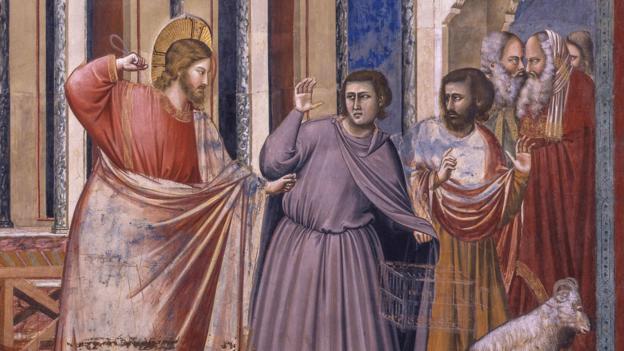 There is an art to anger. From a furious Christ pummelling merchants in a 14th-Century fresco by Giotto to a window-smashing spree in Beyoncé's 2016 music video Hold Up, cultural history is punctuated with punchy images that are more than a little hot under the collar. Such works see wrath and rage not as the shameful antitheses of composure and control but as raw and vital in comprehending who we are. Rarely as celebrated or adored as works devoted to love and affection, these studies in abject aggression are no less profound in their meditation on the full palette of pigments with which we paint ourselves into being. Anger may not be angelic, but it is human and deserves some respect. More like this: For every Klimt Kiss that our hearts know by heart, there is a snarling lip or a tightening knuckle seething in a gallery somewhere, waiting to give us a piece of its mind. But where are these irascible masterpieces and how can we appreciate their aggressive grace? As an eruptive inner energy that consumes our physiques and contorts our faces, anger was slow to show itself in visual art. Even figures traditionally equated with uncontainable fury, such as Euripedes' (and later Seneca's) Medea – whose rage so blinds her that she murders her own children in meting out revenge on her husband – seem cool and collected in early representations. In a 1st-Century fresco of the tragic character found in Pompeii, the temperature of Medea's inner rage is set on the lowest of gentle simmers. Were it not for the dagger that she squeezes in her hand, as she stands coolly beside the children she is about to murder, we might assume Medea is merely lost in an innocent daydream. The fully fuming Medea we're accustomed to seeing, who wears her hate on her sleeve in portraits such as Eugène Delacroix's Medea About to Murder Her Children (1838), won't show her wrathful face for centuries. In the meantime, anger, as a concept, underwent something of a metamorphosis in Western cultural consciousness thanks in part to the theorising of a 4th-Century ascetic monk, Evagrius Ponticus, to whom we owe the notion of 'deadly sins'. In his treatise Logismoi, written in 375, Evagrius identified eight patterns of evil thought from which sinful behaviour emerges (a schema the Catholic Church went on to abbreviate to seven in the 6th Century) and set anger apart from the other unsavoury emotions of which we're capable. Evagrius argued that all other sins could be grouped into broader categories: those that stem from lustful desire (including greed, gluttony, and fornication) and those that issue from a corrupt mind (pride and vanity), while sorrow and discouragement together sat somewhere in the middle. But anger was different. It belonged to its own class of 'irascibility' or 'ire' – a word derived from the ancient linguistic stem 'eis-', which carried connotations of divine passion. A close cousin of holy fire, anger was equated by Evagrius to being possessed by a demon and was proof, he concluded, that humans shared a sacred nature with angels. The influence of Evagrius's thinking on cultural consciousness is discernible in a seminal depiction of anger in the Scrovegni Chapel in Padua, celebrated for its ethereal fresco cycle by the late medieval Florentine master Giotto. In addition to his famous depictions of lamentations and adorations set against an evaporating blue, Giotto also includes in his design a sequence of 14 personifications of vices and virtues expressed in sober grisaille, or shades of grey and cerebral brown. Among the seven vices he portrays, Giotto's 'Ira', stands out for its intensity. It depicts a woman violently tearing away the material layers that restrict the outward flow of her inner incandescence. The heavenward thrust of the female figure's exposed chest and the strain of her anguished face to be recognised by the firmament above her, aligns rage with an awkward yearning to commune with something higher. Rage is ugly but it's real.
Anyone in any doubt about the artist's sympathetic attitude to anger needs merely look above the personification of Ira in the chapel to Giotto's portrayal of Christ punishing a scrum of greedy money changers that he has stumbled across in the temple. Throughout cultural history, the New Testament subject has been a favourite of artists keen to demonstrate that they could capture the human countenance and form in a wider array of moods than merely devotional calm. Tackled by everyone from Pieter Brueghel the Elder to El Greco, the subject allowed painters the opportunity to flex their brushes without appearing to glamorise otherwise unsavoury behaviour. Anger isn't anti-social if it's righteous and divine. In almost every version of the incident by Old Masters, Christ is shown with arm raised, wielding 'a whip of cords' in faithful conformity to the language of biblical accounts of the story, as he thrashes the merchants who have turned a place of worship into one of worldly profit. But Giotto's take on the story is striking. At first glance, the outraged Christ appears to go full Fight Club on his target as he dispenses with the swinging lash in favour of bare-fisted justice. "The raising of the right hand, not holding any scourge," according to a 19th-Century traveller who chronicled every inch of the chapel's glorious interior, "resembles the action afterwards… of Michelangelo in his Last Judgement".
Look closer, and there may be a slight suggestion of a time-faded whip after all, suspended like a skein of heat vibrating from Christ's hand-grenade knuckles, which grip our eyes at the centre of the fresco. For Giotto, anger is an organising energy; everything in his work orbits around the centrifugal force of the juddering fist that is forever about to blow. Livestock leap from the imminent blast as a young child, hiding behind a cloak on the left side of the painting, tries desperately to shield from the unfolding violence a white dove, a symbol of tranquil spirit. By serving us anger two ways (both as a vice and a virtue) feet from each other on the same wall of the Scrovegni chapel, Giotto sets the table for all subsequent portrayals of this complex emotion. Shades of grey The ensuing centuries saw the emergence of an intriguing tradition of works that seek to understand more fully the nature of rage as an energy that is neither wholly damnable nor divine. From a slapstick allegory of wrath as a tipsy spat between two drunkards in the witty wheel of morality attributed to Hieronymus Bosch, The Seven Deadly Sins and the Four Last Things (1505-1510), to the apocalyptic vision The Great Day of His Wrath (1851-3) by the Romantic doomsayer John Martin, the full spectrum of anger is mapped. Wrath establishes itself as an electric vein that throbs across the forehead of art history – from Giovanni Battista Tiepolo's suspenseful painting The Anger of Achilles (1757), in which the goddess Minerva stops a seething Achilles from killing Agamemnon by grabbing him by his hair, to the stony rage of John Flaxman's marble sculpture The Fury of Athamas (1790-94), in which the King of Thebes swings his snatched-up son's body like a baseball bat. Crucial to the development of this perennial strand of angry images since the 17th Century has been the unflinching imagination of female artists depicting furious female subjects. Artemisia Gentileschi's serial fascination both with the biblical story of Judith decapitating the Assyrian general Holofernes, who was about to destroy her home, and with Medea's infanticide, was followed half a century later by one of the more mesmerising images of composed rage in all of art history – Baroque artist Elisabetta Sirani's portrait of Timoclea of Thebes (1659). The only outward sign of inner rage we can detect from Timoclea's porcelain expression in Sirani's painting is the slightest angling inward of her eyebrows as she concentrates on the cumbersome task at hand: shoving the bulky body of the Thracian soldier who has just raped her into a well, where she'll calmly pound him to death with stones. In every respect, Sirani's study in revenge is a masterclass in poise over provocation, composure over rage. Timoclea's unflappable control of the farcically flailing legs of her abuser, which she guides into the gap with the finesse of a seasoned forester feeding branches into a woodchipper, vibrates with brutal beauty. She's angry, but the anger doesn't consume her. She channels the fire. Unrumpled by rage, her unfailing sense of style (note the cold teardrop pearl pendulating judiciously from her ear, symbolising the suspension of all remorse) continues to resonate in cultural consciousness to this day. The unflustered cool of Sirani's portrait of Timoclea finds an unexpected echo in the stylish rampage of Beyoncé's video Hold Up, in which Beyoncé smashes parked cars with a baseball bat while jauntily singing of love and hatred, commitment and revenge. The flair and frenzy of the video calls to mind a short film from 1997 – Ever is Over All, by the Swiss artist Pipilotti Rist, who calmly saunters down the street shattering one car window after another with an outsized tropical stem that she swings like a surreal cosh. Both Beyoncé's and Rist's works seek to reclaim anger as a self-realising energy – a redemptive power, not a destructive disease. In doing so, they tap into a secret well-spring of creative impulse and urgency that is almost as old as art itself. If you would like to comment on this story or anything else you have seen on BBC Culture, head over to our Facebook page or message us on Twitter. And if you liked this story, sign up for the weekly bbc.com features newsletter, called The Essential List. A handpicked selection of stories from BBC Future, Culture, Worklife and Travel, delivered to your inbox every Friday.  |
| A Photo of Beyoncé's Children Was Leaked on Instagram—And That's Not Okay - Oprah Mag Posted: 04 Apr 2019 12:00 AM PDT  Yesterday, an adorable photo of Beyoncé and Jay-Z's three children began making the rounds on social media. It was a stunning portrait of their 7-year-old, Blue Ivy, with her lesser-seen younger siblings, 22-month-old twins Rumi and Sir. The problem? It quickly became clear that this was a private photo that was leaked. The snap of the twins snuggled up with their big sister while sitting in the grass looks like it was taken by a professional photographer. But it was also obviously a photo of a photo in a frame, with a visible glare in the reflection. Fans quickly noticed it was nowhere to be seen on any of Beyoncé's social media channels, nor on her website, Beyonce.com, where she usually releases personal news. It was immediately evident that this was a private picture—one that was very likely taken without permission by someone who was inside the Carter family's home. The photo first surfaced on the Instagram account for the pop-culture blog Hollywood Unlocked, which has 1.5 million followers. Though the caption was initially attributed to Freeish Media, founder Jason Lee later gave a statement to several outlets that the picture was sent to them via an anonymous source. "We posted the image believing that it had already been posted by the Carters," Lee told Buzzfeed. "After receiving a call from Beyoncé's representative and learning that the image was not authorized we immediately removed it from our platform out of respect for their privacy." Beyoncé fans like myself were outraged by the entire debacle. Over the years, she's changed the narrative when it comes to the entitlement the media feels about access to celebrities' personal lives. Rather than doing interviews or constantly giving statements to the media, the pop star chooses to tell her own story, whether it's by letting the cameras into her life for a documentary or dropping a surprise album, Lemonade, which channeled her experiences through art. And instead of submitting her children to constant paparazzi-hounding, she releases much-sought after photos of her family via her social media, or often during sweet montages that play on the big screen during her performances on tour. Over the years, Beyoncé has essentially sent us an important message: I'm grateful to be famous and to be able to do what I love, and I will share my life with you, my fans—but I will do it my way. But yesterday, it became clear that's not something that everyone can respect. And the Beyhive—myself included—was outraged. To some extent, celebrities open up their entire beings to us all. In exchange for their status, they understand that they'll receive endless probing and speculation about their lives from the media. It's all part of the fame game. But there are several lines that should never be crossed, even for someone with a name known in millions of households around the world. For even the most famous celebrities, children should be off limits. Yes, we're all dying to see more of Bey-Z's cute kids. But that doesn't give any of us the right to invade their privacy. As a superstar, Beyoncé has changed the history of music forever. So the least we can do is respect her when it comes to her children. And for those of us who are patient enough to wait for something new from the Queen herself, there's good news: She's reportedly working on new music and a Netflix documentary. So, my dear media friends and fellow Beyhive members: Let's all skip the sharing of leaked photos and invasions of privacy and instead, tune in for the glimpses of her family when she shares them herself—whenever she's ready. For more stories like this, sign up for our newsletter.  |
| You are subscribed to email updates from "beyonce children" - Google News. To stop receiving these emails, you may unsubscribe now. | Email delivery powered by Google |
| Google, 1600 Amphitheatre Parkway, Mountain View, CA 94043, United States | |




0 Yorumlar